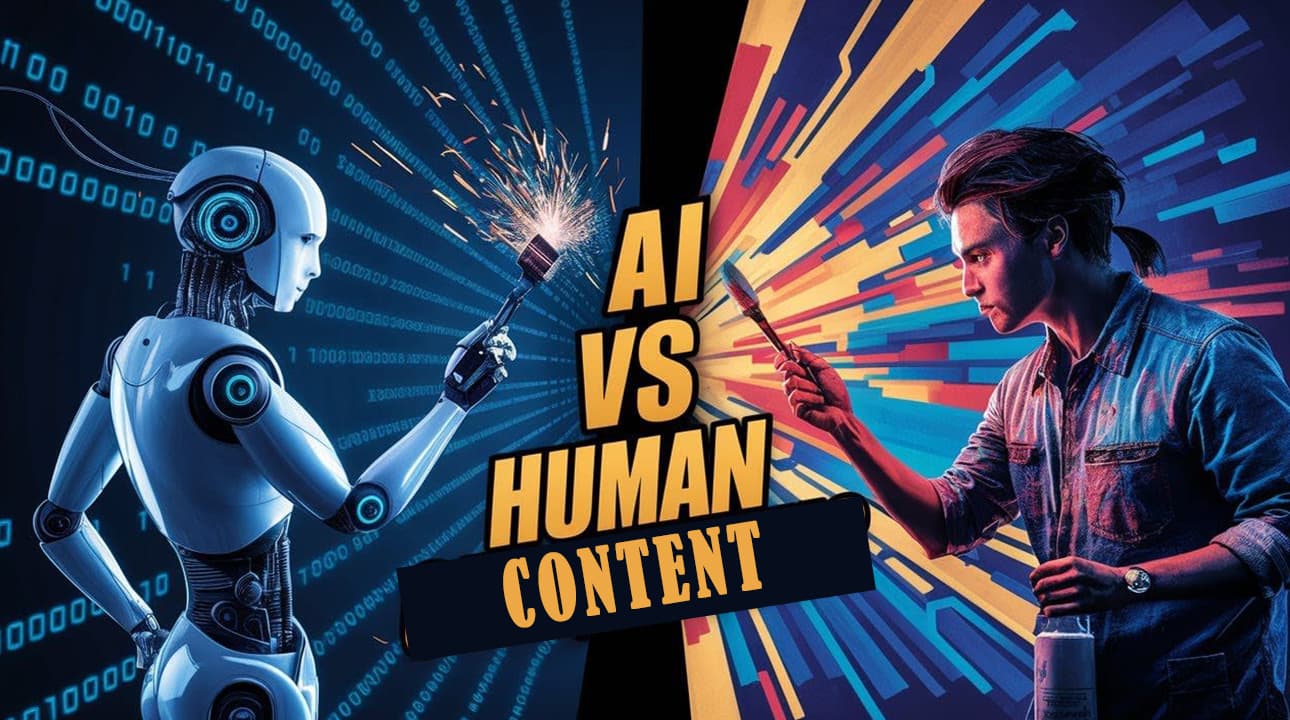
The landscape of digital marketing has transformed dramatically with the rise of artificial intelligence. As Search Channel Optimization (SCO) extends beyond traditional SEO to encompass AI-powered search engines, social platforms, and voice assistants, marketers face a critical question: should content be created by humans, AI, or a combination of both? This decision impacts everything from search visibility and engagement to brand trust and conversion rates. Understanding the strengths and limitations of each approach is essential for building an effective SCO strategy in 2025.
What Is AI-Generated Content?
AI-generated content refers to text, images, or multimedia created by machine learning models trained on vast datasets. These tools can produce articles, product descriptions, social media posts, and marketing copy within seconds, making them attractive for businesses seeking to scale content production efficiently.
How AI Content Tools Work in 2025
Modern AI content generators use large language models (LLMs) that analyze patterns in billions of text samples. They process prompts from users and generate contextually relevant responses by predicting the most likely word sequences. Advanced tools now incorporate real-time web access, multi-modal capabilities, and fine-tuning options that allow businesses to customize outputs based on brand guidelines and audience preferences.
Popular AI Content Writing Tools Used in SCO
Several AI platforms dominate the SCO marketing space. ChatGPT and Claude enable conversational content creation with nuanced understanding. Jasper and Copy.ai specialize in marketing copy optimization. Tools like Surfer SEO and Frase combine AI writing with search optimization features, analyzing top-ranking content to guide creation. Meanwhile, platforms like Midjourney and DALL-E handle visual content needs, supporting comprehensive multi-channel campaigns.
What Is Human-Generated Content?
Human-generated content is created entirely by people, leveraging their lived experiences, emotional intelligence, cultural awareness, and creative judgment. Human writers bring unique perspectives, original insights, and the ability to connect with audiences on a deeply personal level.
Unique Strengths of Human Writers in SCO Marketing
Human writers excel at understanding subtle context, cultural nuances, and emotional resonance that AI often misses. They conduct original research, conduct interviews, and draw from personal expertise to create authoritative content. Humans adapt tone and style intuitively for different audiences, maintain consistent brand voice across complex campaigns, and make ethical judgments about sensitive topics. Their ability to recognize what will genuinely help or engage an audience rather than simply matching patterns gives human content its distinctive value.
Pros and Cons of AI Content in SCO
Pros of AI Content
AI offers remarkable speed and efficiency, generating drafts in seconds rather than hours. This scalability makes it ideal for producing high volumes of content across multiple channels simultaneously. AI tools work around the clock without fatigue, maintaining consistency in tone and formatting. They excel at data-driven optimization, quickly incorporating keyword research and SEO best practices. For straightforward informational content, product descriptions, or content refreshes, AI significantly reduces costs while maintaining acceptable quality standards.
Cons of AI Content
Despite improvements, AI content often lacks depth and originality. It can produce factually incorrect information or outdated references without real-time verification. AI struggles with nuanced topics requiring cultural sensitivity, emotional intelligence, or ethical judgment. The content may feel generic or formulaic, failing to establish authentic brand differentiation. AI cannot provide true expertise or experience-based insights, limiting its ability to satisfy Google's E-E-A-T criteria. Additionally, over-reliance on AI risks creating detectable patterns that may impact trust and engagement over time.
Pros and Cons of Human Content in SCO
Pros of Human Content
Human-created content delivers authenticity and originality that resonates with audiences. Writers bring genuine expertise, personal anecdotes, and unique perspectives that build authority and trust. They naturally incorporate storytelling elements that increase engagement and emotional connection. Human writers excel at strategic thinking, understanding how content fits into broader marketing objectives and customer journeys. They can navigate complex or sensitive topics with appropriate nuance and ethical consideration, ensuring content aligns with brand values while meeting E-E-A-T standards.
Cons of Human Content
The primary drawback of human content is time and cost. Quality writing requires research, drafting, editing, and revision processes that can take days or weeks. Scaling human content production is expensive, requiring either larger teams or accepting lower output volumes. Human writers may have inconsistencies in productivity and quality depending on their workload and expertise. Unlike AI, humans cannot work continuously, limiting rapid content deployment for time-sensitive campaigns or breaking news topics.
AI vs Human Content: Key Differences in SCO Marketing
Quality, Depth, and Context Understanding
Human content typically delivers superior depth and contextual understanding, especially for complex topics. Humans can synthesize information from multiple sources, apply critical thinking, and provide original analysis. AI excels at surface-level information synthesis but often misses subtle connections and deeper implications. For SCO success in competitive niches, the depth that human expertise provides often determines whether content ranks and converts.
Speed, Scalability, and Cost
AI dramatically outperforms humans in speed and scalability. A single AI tool can generate hundreds of content pieces daily at a fraction of the cost of hiring writers. For businesses needing rapid content deployment across multiple channels or languages, AI provides unmatched efficiency. However, this advantage diminishes when content requires extensive editing or fails to meet quality standards.
Reliability, Accuracy, and E-E-A-T
Human writers generally produce more reliable and accurate content, particularly when they possess subject matter expertise. They verify facts, cite credible sources, and update content based on current information. AI may confidently present incorrect information or outdated data. For E-E-A-T compliance, human authorship by recognized experts significantly strengthens content authority, especially in YMYL (Your Money Your Life) niches like health, finance, and legal topics.
Brand Voice, Trust, and Personalization
Humans excel at developing and maintaining distinctive brand voices that build recognition and trust. They understand the emotional undercurrents of messaging and can personalize content for specific audience segments intuitively. AI can mimic established brand voices with proper training but struggles with the subtle variations that make content feel genuinely personal and trustworthy.
Ethical and Compliance Considerations
Human oversight remains essential for ethical content creation and regulatory compliance. Humans can identify potentially problematic content, ensure accessibility standards are met, and navigate cultural sensitivities. They understand when topics require disclaimers or expert consultation. AI lacks the judgment to consistently handle these considerations without human review.
SEO & SCO Performance in 2025: AI vs Human Content
Google's Guidelines on AI Content (E-E-A-T & Helpful Content)
Google has clarified that AI content isn't inherently problematic, but it must meet the same quality standards as human content. The focus remains on experience, expertise, authoritativeness, and trustworthiness. Content should demonstrate first-hand knowledge and provide genuine value. AI content that appears mass-produced or lacks helpful information may struggle in rankings, while AI-assisted content that maintains high quality and human oversight can perform well.
Search Visibility Across Channels (Google, AI Search, Social)
Content performance varies across channels. Traditional Google search still rewards comprehensive, well-researched content that demonstrates expertise. AI search engines like Perplexity prioritize clear, direct answers with verifiable sources. Social platforms favor authentic, engaging content that sparks conversation. Human content generally performs better on platforms where personality and authenticity drive engagement, while AI content can succeed in informational contexts.
Engagement Signals: CTR, Dwell Time, and Retention
Engagement metrics often reveal quality differences between AI and human content. Human-created content typically generates higher dwell time and lower bounce rates because it better captures reader interest through storytelling and valuable insights. AI content may achieve acceptable click-through rates with optimized headlines but often struggles to maintain engagement, impacting overall SCO performance.
How Businesses Use AI and Human Writers Together in SCO
Using AI for Research, Drafting, and Scale
Forward-thinking businesses leverage AI for initial research, outline creation, and first drafts. AI handles repetitive tasks like meta descriptions, product variations, and content refreshes. It supports rapid content deployment for trending topics and helps maintain publication consistency across channels. AI also assists with multilingual content creation and data-driven optimization recommendations.
Using Humans for Strategy, Authority, and Trust
Humans lead strategic content planning, ensuring alignment with business objectives and audience needs. They create pillar content, thought leadership pieces, and high-stakes marketing materials where brand reputation is paramount. Human experts conduct original research, provide unique analysis, and build relationships through authentic communication. They oversee content quality, inject personality into brand messaging, and make final decisions on publication.
When to Use AI Content, Human Content, or Both
Use AI Content When
AI content works well for high-volume, straightforward informational content where speed matters more than depth. Consider AI for product descriptions, routine updates, content localization, internal documentation, and initial drafts that will receive human editing. AI is also valuable for content testing and experimentation where multiple variations are needed quickly.
Use Human Content When
Prioritize human content for thought leadership, expert analysis, sensitive topics, and brand-defining pieces. Human creation is essential for YMYL content, original research, investigative journalism, creative campaigns, and any content where authenticity and trust are paramount. Use human writers when building authority, establishing new brand voices, or addressing complex customer concerns.
Use a Hybrid AI + Human Approach
Most successful SCO strategies combine both approaches. AI handles research and drafting while humans refine, fact-check, and enhance content with expertise and personality. This hybrid model maximizes efficiency without sacrificing quality, allowing teams to produce more content at higher standards than either approach alone could achieve.
Future of Content in SCO Marketing
Role of AI in Multi-Channel Search
AI will increasingly power content optimization across diverse search channels, from traditional search engines to voice assistants and AI chatbots. Tools will better understand user intent and generate more contextually appropriate content. However, as AI content becomes more prevalent, truly distinctive content that demonstrates genuine expertise and originality will stand out more prominently.
Why Human Judgment Still Matters
Despite technological advances, human judgment remains irreplaceable for strategic thinking, ethical oversight, and creative innovation. As AI handles routine content production, human roles will evolve toward curation, quality assurance, strategy development, and relationship building. The most successful content operations will use AI to amplify human creativity rather than replace it.
Final Thoughts: AI vs Human Content in SCO Marketing
The debate between AI and human content creation isn't about choosing one over the other but understanding how each contributes to effective SCO marketing. AI provides unprecedented efficiency and scalability, enabling businesses to maintain consistent content production across multiple channels. Human writers deliver the depth, authenticity, and strategic thinking that build lasting audience relationships and brand authority. The optimal approach combines both, using AI to handle volume and routine tasks while reserving human expertise for content that requires originality, trust, and genuine connection. As search continues evolving across platforms and technologies, success will belong to marketers who thoughtfully integrate AI capabilities with human judgment to create content that is both efficient and genuinely valuable.