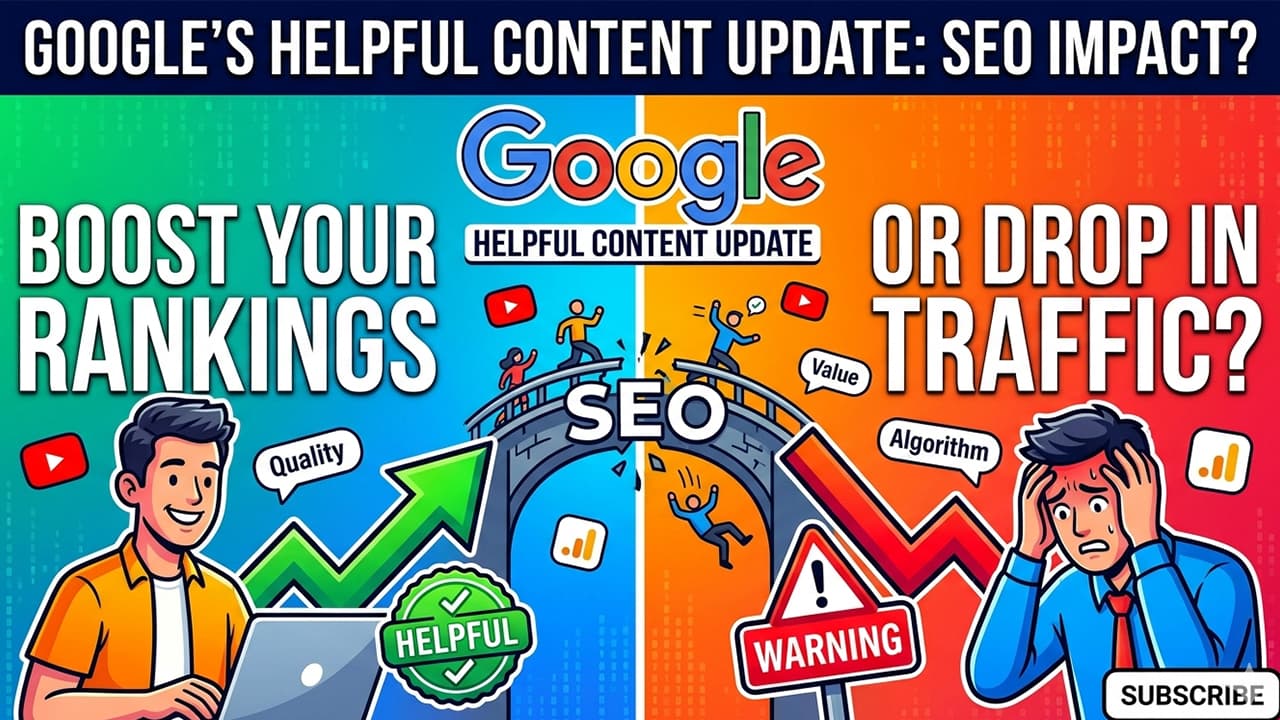
The digital landscape is constantly evolving, and Google's algorithm updates often send ripples across the SEO world. One of the most significant shifts in recent years has been the Helpful Content Update — a change that fundamentally redefines what it means to rank well on Google. If you have been relying on keyword-stuffed articles and thin content to drive traffic, this update is a wake-up call. In this blog, we break down everything you need to know about Google's Helpful Content Update, how it affects your SEO strategy, and what practical steps you can take to stay ahead of the curve.
What is Google's Helpful Content Update?
Google's Helpful Content Update, first rolled out in August 2022 and refined through subsequent updates, is a sitewide signal designed to reward content that delivers genuine value to readers. At its core, the update targets content created primarily for search engines rather than people — what Google calls "search engine-first" content — and deprioritises it in rankings.
What makes this update especially consequential is that it operates at the site level. If a significant portion of your website is deemed unhelpful, the entire domain can be penalised, not just individual pages. Google's classifier runs continuously, meaning your site is always being evaluated. The update rewards websites where the majority of content demonstrates real expertise, first-hand experience, and a clear focus on helping a specific audience.
In short, the Helpful Content Update is Google's way of holding content creators accountable for quality. The days of churning out generic, AI-generated, or thinly-researched articles purely for traffic are over. Today, value-driven content is the only sustainable path to strong SERP rankings.
How To Achieve High SERP Rankings With The Helpful Content Update
Adapting to this update does not require starting from scratch — it requires a strategic shift in your content philosophy. Here are the most effective approaches to align your website with Google's new expectations.
Write For An Intended Audience That Will Find Your Content Helpful
The foundation of the Helpful Content Update is simple: write for people, not algorithms. This means identifying a specific target audience and crafting every piece of content with their needs, questions, and pain points in mind. Before you write, ask yourself who the reader is, what problem they are trying to solve, and why they should trust your website over others.
Will Your Audience Members Feel Satisfied After Reading Your Content?
This is one of Google's key self-assessment questions, and it should be central to your content creation process. After reading your article, does the visitor leave with their question fully answered? Do they feel informed, empowered, or entertained? If your content leaves readers with more questions than answers, or pushes them back to the search results to find supplementary information, it is a strong signal that your content is not truly helpful. Aim for completeness and clarity — content that fully resolves the user's search intent.
Create Content With First-Hand Expertise
Google's E-E-A-T framework (Experience, Expertise, Authoritativeness, Trustworthiness) has become more important than ever. The addition of the first "E" for Experience signals that Google wants to see content written by people who have actually done, used, or lived what they are writing about. If you run a travel blog, write from personal journeys. If you cover financial topics, bring in certified professionals. First-hand insights — anecdotes, original data, unique perspectives — are precisely what separates genuinely helpful content from generic filler that any content farm can produce.
Be Sure Your Site Has A Primary Objective Or Purpose
Google favours websites that are clearly focused on a defined niche or purpose. A site that covers everything from pet care to cryptocurrency to recipe ideas sends mixed signals and can dilute topical authority. Having a clearly defined content strategy — where every published piece ties back to your site's core expertise — helps Google understand what your website is about and who it serves. This coherence builds domain authority over time and signals to Google's systems that your site is a trusted resource in a particular field.
Stay Updated With Google's Guidelines and Product Review Updates
Google regularly publishes its Search Quality Rater Guidelines and releases Product Review Updates that provide invaluable insight into what the algorithm rewards. Staying current with these documents ensures that your content strategy does not fall behind as Google's expectations evolve. Product Review Updates, in particular, now reward content that goes beyond surface-level summaries and provides original analysis, comparisons, and genuine user perspectives. Treat these guidelines as a content blueprint, not just a compliance checklist.
Refresh and Update Old Content Regularly
Outdated content is not only unhelpful to readers — it is also a ranking liability. Regularly auditing and refreshing your existing content is one of the most impactful SEO tactics in the post-Helpful Content era. Update statistics, replace broken links, expand thin sections, and ensure all information is accurate and current. A well-maintained content library signals to Google that your site is actively managed and committed to accuracy, which can significantly boost your overall site quality score.
FAQs
Does updating content improve SEO?
Yes, updating content can significantly improve your SEO. Refreshing outdated articles with new information, statistics, and insights signals to Google that your content is relevant and current. Updated content often sees improved rankings, higher click-through rates, and better user engagement — all of which contribute positively to your site's overall SEO performance.
How often should I update my content?
There is no universal rule, but a good practice is to audit your key content pieces every six to twelve months. Fast-moving topics like technology, finance, or health may require more frequent updates. Evergreen content may need less frequent attention. The key is to prioritise pages that are already ranking and have the potential to climb higher with small improvements.
How can I make my content more helpful?
Focus on thoroughly answering your audience's questions, using first-hand knowledge or expert sources, and structuring content for easy readability. Add original insights, case studies, or data where possible. Avoid padding content for word count — every paragraph should add value. Always write with a specific reader in mind and ask yourself whether they would leave your page fully satisfied.
What are Google updates in SEO?
Google updates are algorithm changes that alter how search results are ranked. They range from broad core updates that affect rankings across the board, to targeted updates like the Helpful Content Update and Product Review Update that focus on specific types of content. Staying aware of these updates is essential for maintaining and improving your site's visibility in search results.
Does Google like new content?
Google does value fresh content, especially for time-sensitive topics. However, newness alone is not enough — the quality, relevance, and helpfulness of the content matter far more. A well-researched, regularly updated older article will almost always outrank a hastily published new one. Freshness is a ranking factor, but it operates alongside many other signals including authority, user experience, and content depth.
Conclusion
Google's Helpful Content Update is not a temporary trend — it is a fundamental shift in what SEO success looks like. The update makes one thing abundantly clear: content created to genuinely help people will always outperform content created merely to game the algorithm. By writing for a defined audience, drawing on real expertise, maintaining a focused site purpose, and consistently refreshing your content, you build a digital presence that is resilient to algorithmic changes.
The brands and creators who will thrive in this new landscape are those willing to invest in quality over quantity — those who treat every piece of content as an opportunity to build trust with both readers and search engines. Start auditing your existing content today, align your strategy with Google's guidelines, and commit to creating content that truly makes a difference to your audience. That is the most reliable SEO strategy for the long term.